When you decide to sell your junk car, the first thing that comes to mind is simple. “How much will I get for it?”
But once you start contacting buyers, things get confusing. One buyer offers $200. Another says $450. A third one goes even higher or lower. At that moment, it feels random. But it’s not random at all.
Junk car buyers in Providence follow a structured way of calculating value. The problem is, most sellers don’t understand that process. And when you don’t understand something, you usually end up accepting less than you should.
This guide will help you see how buyers actually think. Once you understand that, you stop guessing and start negotiating with confidence.
Why Understanding Car Value Calculation Matters
Dealing a junk car isn’t a commodity people do every day. It’s generally a one- time experience, which means there’s no literacy wind unless you actively try to understand it. That’s where most people lose control.
If you don’t know how your car is being priced, you can’t tell if an offer is fair. You might accept the first deal just to get it over with.
But when you understand the logic behind pricing, everything changes. You begin to notice patterns. You start asking better questions. And most importantly, you avoid being undervalued.
Think of it like dealing with anything precious. The more informed you are, the stronger your position becomes.
The Core Factors Buyers Use to Calculate Value
Every junk car buyer looks at a combination of factors. No single element decides the price on its own. Instead, buyers build a mental calculation using multiple layers.
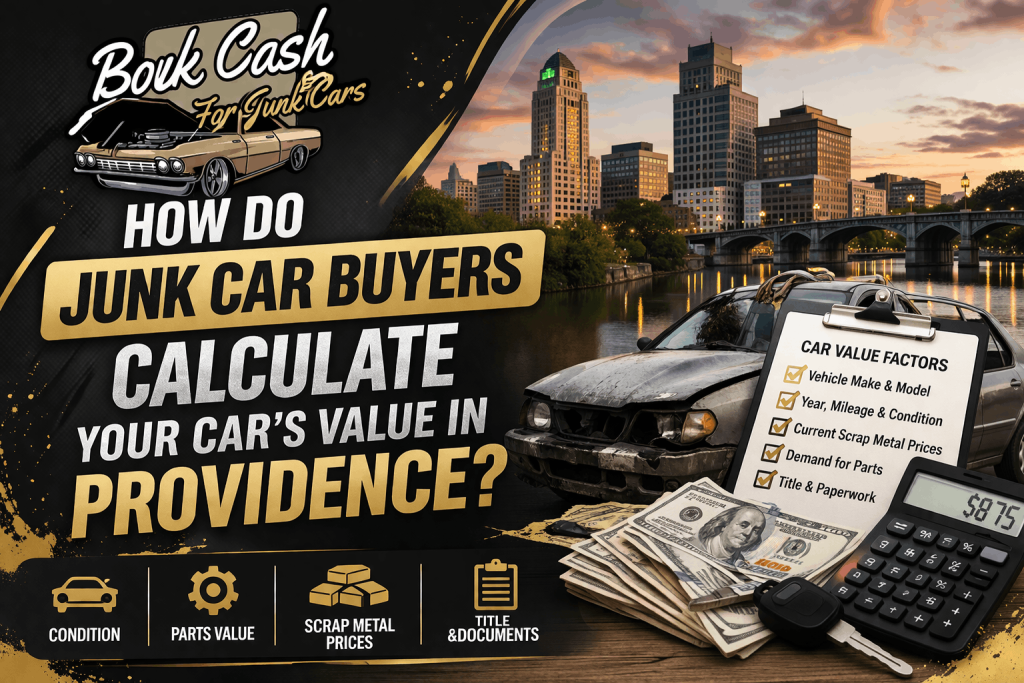
The most important elements include:
- The overall weight of the vehicle
- Current scrap metal market rates
- Condition of the car and its components
- Demand for specific parts
- Ease of pickup and transportation
Each of these plays a part, and the final price is a result of how they interact with each other.
Scrap Metal Value: The Starting Point
No matter how damaged your car is, it always has a base value. This comes from its metal content. Cars are substantially made of recyclable stuff. Swords, aluminum, and other essence can be reused and reused. That alone gives your car a minimum worth.
Buyers begin their calculation from this point. They estimate your car’s weight and apply current scrap rates. These rates change depending on global demand. Industries like construction and manufacturing influence these fluctuations.
For illustration, during days of high demand, scrap prices rise. That means your car automatically becomes more valuable, even if its condition hasn’t changed. This is why timing matters more than people realize.
Condition: Looking Beyond the Surface
Many sellers think condition only means whether the car runs or not. But buyers look much deeper than that. A non-running car can still be valuable if certain parts are intact.
Buyers inspect components like the engine, transmission, catalytic converter, and even smaller parts. If these are in decent condition, they add value on top of scrap pricing. Let’s make this more real.
A seller in Providence had a car that wouldn’t start. He assumed it was only worth scrap. But during inspection, the buyer noticed the transmission was still functional.
That single detail increased the offer by more than $200. Condition is not a yes-or-no factor. It’s a detailed evaluation.
Real-Life Example: How Value Changes Based on Perspective
Consider this situation. Two buyers look at the same car. The first buyer focuses only on weight. He sees it as scrap and offers a basic price.
The second buyer looks at the car differently. He notices usable parts, recent replacements, and resale potential. The second offer is significantly higher.
This happens often in Providence. The difference is not in the car. It’s in how the buyer evaluates it. That’s why comparing offers is one of the smartest things you can do.
Demand for Parts: The Silent Price Booster
Some vehicles are more valuable simply because their parts are in demand. Popular auto models frequently have a strong resale request for corridors. Buyers know they can rapidly sell these factors, so they’re willing to pay further outspokenness.
Indeed small corridors can impact value. Headlights, glasses, and electronic factors may feel insignificant, but they add up.
This is especially true in cities like Providence, where demand for affordable relief corridors remains steady. A car that looks worthless to you might actually be a resource for multiple buyers.
Location and Towing: The Hidden Cost Factor
This is one of the most overlooked elements in junk car pricing. Where your car is located affects how much a buyer is willing to pay.
If your vehicle is easy to access, the process is simple. But if it’s parked in a tight space or far from main roads, the buyer may reduce the offer to cover extra effort.
For example, a car parked in an open driveway in Providence is much easier to tow than one stuck in a basement garage or behind other vehicles. These small logistical challenges directly impact your final price.
How Buyers Actually Calculate the Final Offer
Most buyers follow a simple but layered approach. They start with scrap value. Then they evaluate parts that can be reused or resold. After that, they subtract costs like towing, labor, and processing.
The final number you admit is the result of this entire computation. It may not always be explained to you, but the sense is always there. Understanding this procedure helps you see why offers vary so important.
Hidden Factors That Quietly Affect Value
There are factors that many sellers never think about. Seasonal demand can impact certain corridors. For illustration, batteries and heating- related factors may be more precious during colder months.
Energy prices can also shift demand toward specific types of vehicles or corridors. Local regulations and recovering programs may affect how buyers operate, which can laterally impact pricing.
Indeed small changes in the request can produce conspicuous differences in your offer.
Common Myths About Junk Car Pricing
Indeed small changes in the request can produce conspicuous differences in your offer. There are numerous misconceptions that lead merchandisers in the wrong direction.
One of the biggest myths is that a car with a dead machine has no value. In reality, that auto still holds material and corridor value.
Another myth is that all buyers offer analogous prices. As you’ve seen, this is far from true.
Some people also believe that repairing a junk auto will increase its value significantly. In utmost cases, form costs are more advanced than the redundant money you take. Understanding these myths helps you avoid gratuitous losses.
How You Can Estimate Your Car’s Value
While you may not calculate the exact price, you can still form a realistic prospect. Launch by understanding your auto’s weight and condition. also suppose about any corridor that might still be useful.
After that, contact multiple buyers and compare their offers. This procedure gives you a clearer picture and prevents you from accepting a low deal out of the query.
Simple Ways to Increase Your Final Offer
You don’t need major changes to upgrade your outgrowth. Occasionally, small sweats produce conspicuous results.
Presenting your auto in a clean condition makes a difference. It shows that the vehicle has been maintained, even if it no longer runs.
Being transparent about the condition also helps. Buyers appreciate honesty and are less likely to reduce their offer later.
Mentioning recently replaced parts can also increase your value. Even minor upgrades can influence the final price.
Emotional Value vs Practical Value
This is something every seller experiences. Your car may have emotional value. It might remind you of important moments or phases of your life.
But buyers don’t see that side. They focus on practical value. Understanding this difference helps you approach the procedure more logically. Once you separate emotion from the sale, you make better opinions.
Final Thoughts
Junk car buyers in Providence don’t randomly decide prices. They follow a structured process grounded on weight, condition, demand, and logistics.
When you understand this procedure, everything becomes clearer. You stop feeling confused by different offers. You start getting fair deals. And most importantly, you avoid dealing your auto for lower than it’s worth.
Take your time, compare your options, and approach the procedure with confidence. Indeed an auto that looks fully useless can still bring real value when you understand how buyers suppose.
FAQs
1. Why do offers vary so much between buyers?
Because each buyer evaluates scrap value, parts, and costs differently.
2. Does my car still have value if it doesn’t run?
Yes, it always has scrap value and possibly parts value.
3. What affects my car’s price the most?
Weight, condition, and current scrap market rates.
4. Can I increase my car’s value before selling?
Yes, by presenting it properly and highlighting usable parts.
5. Should I accept the first offer I get?
It’s better to compare multiple offers before making a decision.